
REVISION RHINOPLASTY
Hello,
It’s time for your beauty to be reborn at The Regen Plastic Surgery.
The nose, which is located in the center of the face, is an important part that determines the impression depending on the shape, height, etc. If the nose is wide, the impression does not look sharp, if the nose is hooked, the impression looks strong, and if the tip of the nose is pointing down, it looks picky.
Thus, the nose can improve the overall image with just a small change, so the demand for nose surgery is increasing.
Rhinoplasty
What Are the Reasons for Revision Rhinoplasty?
Revision rhinoplasty is relatively common in the field of cosmetic surgery, especially in the case of nose surgeries.
The nose is a complex and three-dimensional structure, which makes achieving both aesthetic and functional goals challenging.
Standard rhinoplasty procedures often involve the use of artificial implants like silicone or Gore-Tex to enhance the height and shape of the nasal bridge.
While these methods allow for simple shape adjustments and are cost-effective, they tend to create an artificial appearance, and patients might experience discomfort or the sensation of a foreign object in their nose, making long-term satisfaction difficult to achieve.
As a result, many individuals eventually opt for revision rhinoplasty.


Revision rhinoplasty
When do you need revision rhinoplasty?
✔ A nose with a high bridge but a low and blunt tip
✔ A nose with a visible outline of the implant
✔ A nose with an unstable implant that moves
✔ A nose with a red tip and thin skin that shows the implant
✔ A nose with a crooked bridge due to a twisted implant
✔ A nose with a gradually lifting tip
If you fall into these cases, you should first remove the implant quickly to prevent the situation from getting worse. Then you should consider revision rhinoplasty.
If you have a problem and need revision rhinoplasty, we recommend this method over others at The Regen.
A method of using autologous tissue to complement artificial implant problems’
As mentioned earlier, most of the problems are caused by artificial implants. If you are considering revision rhinoplasty, you would want to find a stable method that can give you the desired result without needing further improvement.
At The Regen, we guide you to use autologous tissue instead of artificial implants for revision rhinoplasty. You can expect a more stable result by using your own tissue rather than artificial implants.
non-implant rhinoplasty

What is non-implant rhinoplasty that is used for nose revision surgery?
Non-implant rhinoplasty is a method of improving the nose problems by combining autologous tissues from the septal cartilage, ear cartilage, rib cartilage, autologous dermis, etc.
Because no external materials are used, it can reduce the worries of reactions such as contraction, inflammation, etc. caused by rejection or the implant piercing through the skin and create a natural impression.


How to use autologous tissue for sensitive and delicate nose
Many people think of ear cartilage when they hear autologous tissue, but actually there are various parts that can be used for autologous tissue, and the parts used vary depending on the desired nose shape.
Basically, to raise the nose, septal cartilage, ear cartilage, and rib cartilage are used.
✔ Septal cartilage
Septal cartilage is the cartilage that divides the nostrils from side to side and is flat and less curved, so it is mainly used to lift the tip of the nose or extend the length of the nose.
✔ Rib cartilage
If there is not enough septal cartilage for the first nose surgery, you can proceed by harvesting rib cartilage attached to the ribs. Rib cartilage is a material with excellent support and durability and can be harvested in large quantities.
✔ Ear cartilage
Ear cartilage is similar to the tip of the nose cartilage and is the most commonly used, and can be performed without ear shape change or scars.

✔ Temporal fascia
Temporal fascia is a fibrous membrane that covers the muscles, and it is used to prevent the problem of seeing through the thin skin of the tip or the bridge of the nose and to fill the space.
✔ Autologous dermis
Autologous dermis is the dermis from the back of the buttocks, and it has the characteristics of flexibility, elasticity, and tensile strength.
✔ Donated cartilage, dermis
If it is difficult to harvest autologous tissue, donated cartilage and dermis are used. You can expect a stable result by using surgical materials that are similar to real skin and have proven stability.

What are the features of The Regen revision rhinoplasty?
The Regen uses a cartilage grinder technique that wraps the cartilage crushed into small particles with fascia and uses it as a nasal bridge implant.
This prevents the nose from feeling artificial, such as being hard or crooked.
You can also adjust the amount of cartilage and fascia to create the height and shape of the nose that suits your needs.
It usually takes about two and a half hours and you can leave the hospital on the same day.
After the revision rhinoplasty, you will see the progress and remove the stitches after seven days.
However, the surgery time, anesthesia method, etc. may vary depending on the patient’s condition.
What are the precautions for revision rhinoplasty?
You should carefully consider the length of your face, the nasolabial angle, the shape of your nose, and the condition of your autologous tissue before proceeding with nose revision surgery.
Also, each person has different states of septum, cartilage, dermis, and autologous fat, and if you harvest too much septum, your nose may collapse or have other problems. Therefore, you should harvest an appropriate amount within the limit that does not cause any problems after a thorough examination.
Revision rhinoplasty can involve various situations such as implant removal, skin damage, inflammation, and keloid. Using autologous tissue is a method that requires careful attention. It is important to find a medical team that has a balanced combination of related clinical cases, skills, aesthetic sense, and expertise.
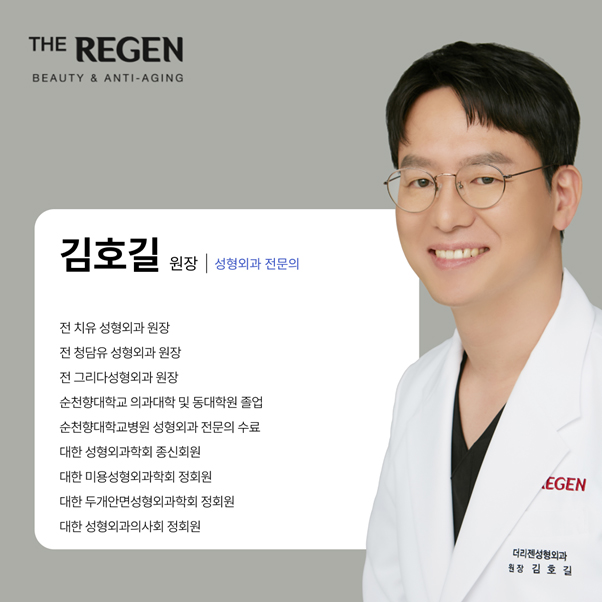
At The Regen, we work together for your final revision rhinoplasty.
After talking with our medical staff one-on-one, we comprehensively understand the period and problems after your first nose surgery and provide an accurate diagnosis and a specific plan for your desired result, and we also check your condition continuously after the surgery.
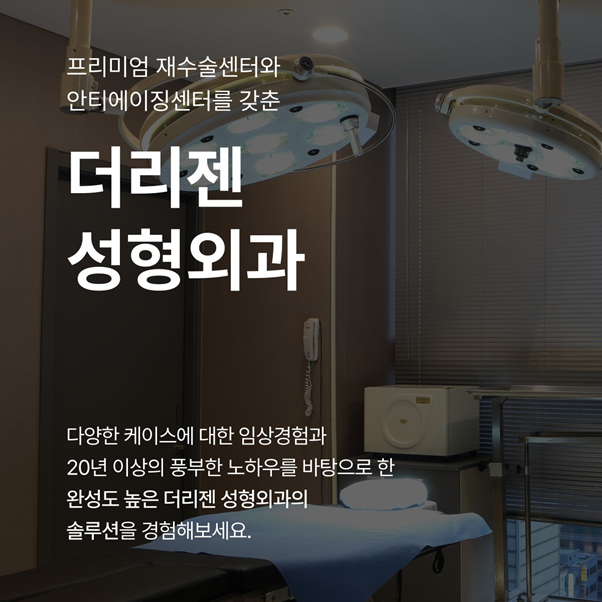
Based on over 20 years of experience with a wide range of cases, our head surgeon provides direct guidance.
If you have any questions, you can find more detailed information on our website.


Visit Us Today!
Online consultations are available through the LINE app. Scanning the QR code will connect you with The Regen Plastic Surgery counselor. Thank you.
Contact
info@theregenblog.com
+82-2-596-3456
Follow